

Takeaways
The construction workforce gap is not just a shortage of workers; it is a mismatch between volatile demand, delayed supply, and short-term fixes that erode productivity.
Industrial booms and maintenance shutdowns create predictable labour spikes, but at different rhythms, and the industry lacks institutional mechanisms to coordinate them.
Productivity is the hidden multiplier: when productivity falls, the same project pipeline requires more labour hours, more supervision, and more rework.
Apprenticeship intake alone will not solve the gap if completion remains low or workers exit during downturns.
The next demand wave is arriving, this time with stronger centralized national drivers.
I was invited to speak at the Construction Innovation Centre Forum, in a session on Canada’s construction workforce gap, and to participate in a panel discussion on demand, supply, and productivity, with representatives of the Government Alberta, Alberta Building Trades, and Alberta Centre for Labour Market Research (ACLMR).
That invitation became an opportunity for me to pull together what I have learned over the past few years about construction workforce issues by speaking with industry veterans in Alberta and across Canada, reviewing the literature, and trying to understand the system-level forces shaping the problem.
This article is my attempt to put those reflections in writing. Much like the panel discussion itself, it is in the spirit of contributing to a difficult and important conversation.
Below are the main sections of the article.
Defining the Gap
The Industrial Boom-Bust Cycle
The Heavy Industries Maintenance Cycle
The Coordination Gap: Everyone Plans Alone
Supply Cannot Respond Fast Enough
The Band-Aid Trap: Why Usual Fixes Can Backfire
Productivity: The Hidden Multiplier
Unions: Stabilizers in the Boom, Exposed in the Bust
The Understanding Gap
The Next Wave and Our Chance to Course-Correct
Question then Becomes
The Canadian construction sector is fortunate to have many people across industry, government, unions, training institutions, and academia who are working, sincerely and every day, to strengthen its health and maturity. My hope is that our research at the University of Calgary can also help with tangible impacts on the ground. The stakes are high, and so is the potential for positive impact.
To this end, our EPM Research Group at the University of Calgary is beginning a project titled “Synthesis and Management of Regional Construction Project Portfolios.” Our angle on the problem is to understand how overlapping projects unfold, how regional labour pools and productivity constraints interact, and how better coordination might help. Please feel free to reach out if this work is of interest or if you would like to participate as an expert in this program.
Let us dive in to review the problem.
1. Defining the Gap
The construction workforce crisis is often described as a shortage: too much work, not enough workers.
That framing is not wrong. Owners, contractors, and project managers feel the shortage directly when bids come in higher, crews are hard to staff, schedules slip, or experienced supervisors are stretched across too many sites. But the simple shortage story misses the deeper mechanisms.
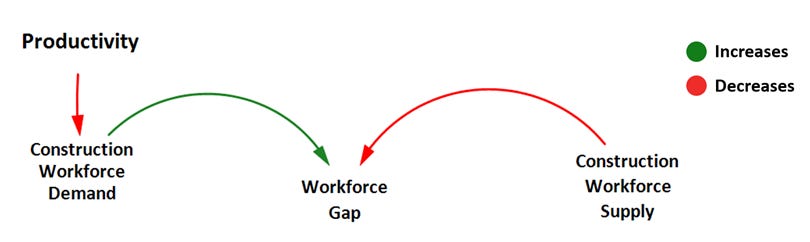
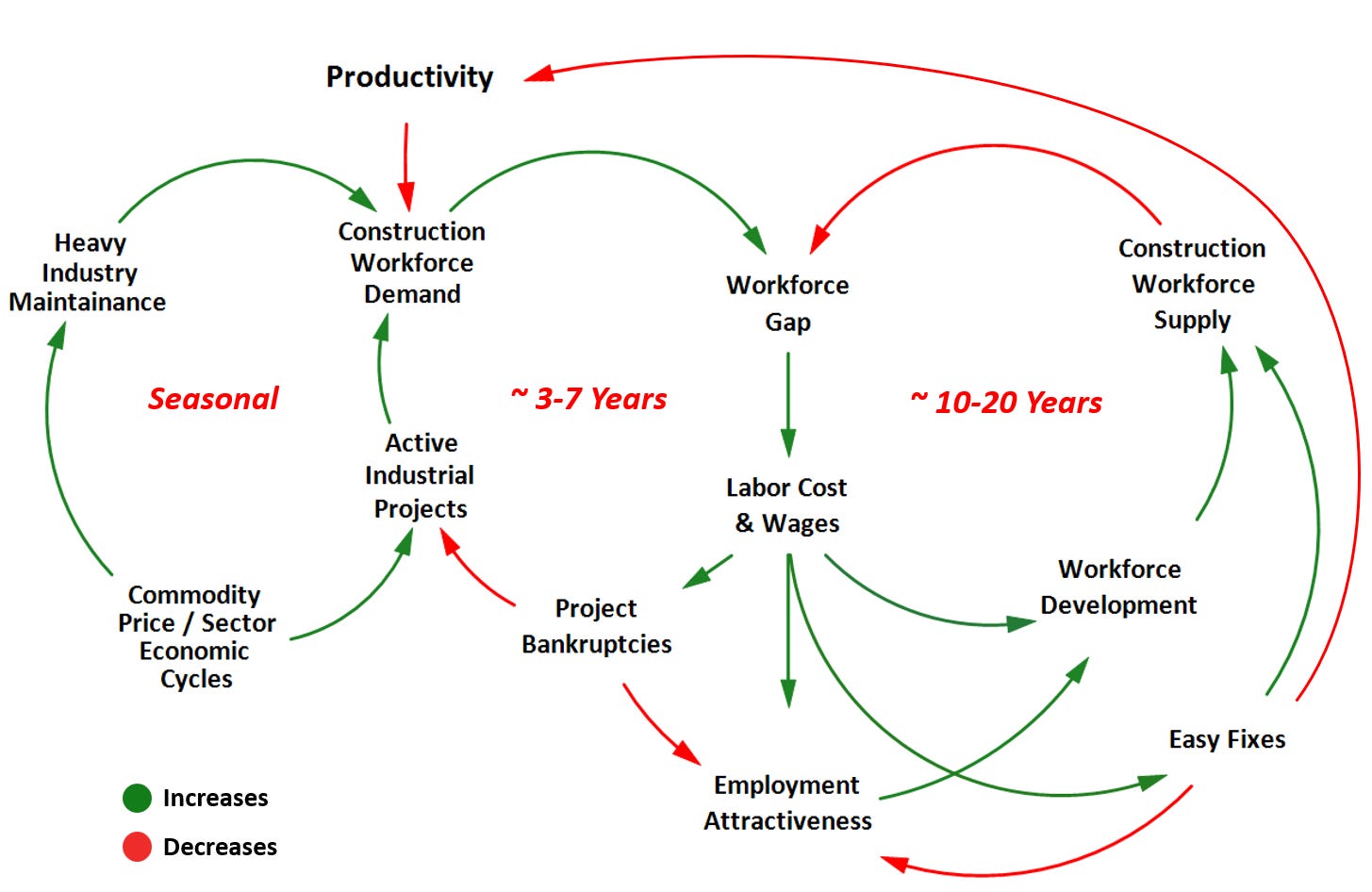
At its core, the workforce gap can be expressed as: Workforce Gap = Effective Labour Demand − Available Labour Supply. In a more explicit form: G(t) = D(t) / P(t) − S(t)
Where if D(t) is the volume of construction demand, it will be adjusted by P(t), that is the productivity, to arrive at the effective labour demand.
Productivity does not sit outside the workforce problem. It changes the size of the problem itself.
When productivity falls, the same amount of construction output requires more labour hours, more supervision, and often more rework. In practical terms, lower productivity increases effective labour demand even if the project pipeline stays the same.
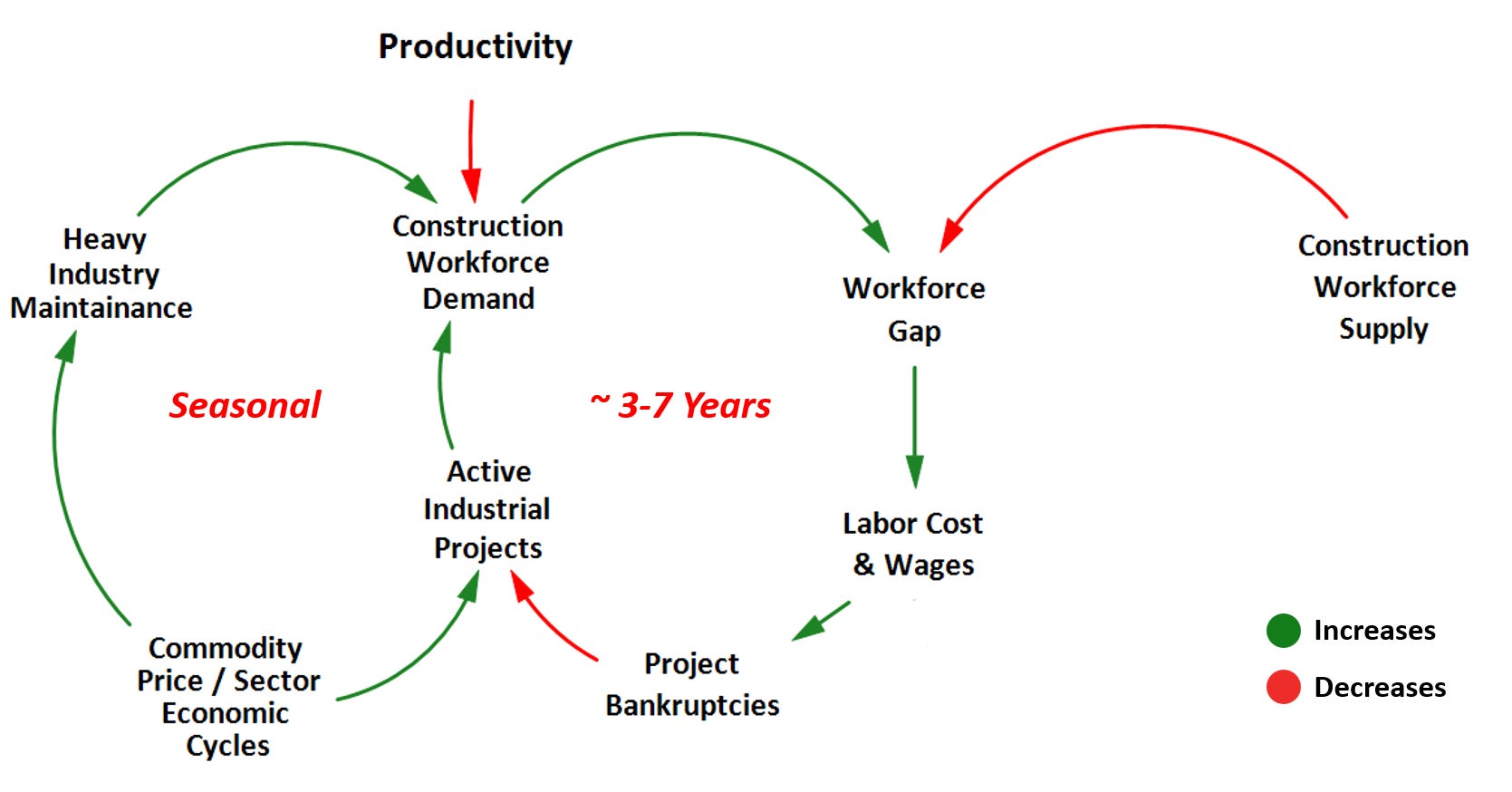
This main workforce equation can be depicted as the system below, using a simplified system dynamics convention: green arrows indicate an increase, and red arrows indicate a decrease. We will use this convention throughout the post.
BuildForce Canada projects a shortfall of 108,300 workers by 2034, accounting for retirements and expected new entrants [1]. RBC has estimated that Canada may need more than 500,000 additional construction workers by 2030, largely because of housing and infrastructure demand [2]. The difference between these figures reflects differences in scope, assumptions, time horizon, and whether the estimate captures broader demand pressures and productivity effects.
While the exact numbers are debatable, the pressure is already visible across the industry. One survey reported that 72% of British Columbia contractors had turned down work because they could not secure enough skilled trades [3].
This framing also treats workers as interchangeable units of supply. A qualified tradesperson cannot be moved instantly from one project to another. Assuming labour supply as a pool of interchangeable workers is a useful modelling simplification. But it flattens the differences between trades, levels of experience, regional relationships, and career trajectories.
Assuming labour supply as a pool of interchangeable workers flattens the differences between trades, levels of experience, regional relationships, and career trajectories.
2. The Industrial Boom-Bust Cycle
BuildForce Canada estimates that of roughly 1.3 million construction workers in Canada in 2024, about 680,000,or 52%, worked in non-residential construction [1].
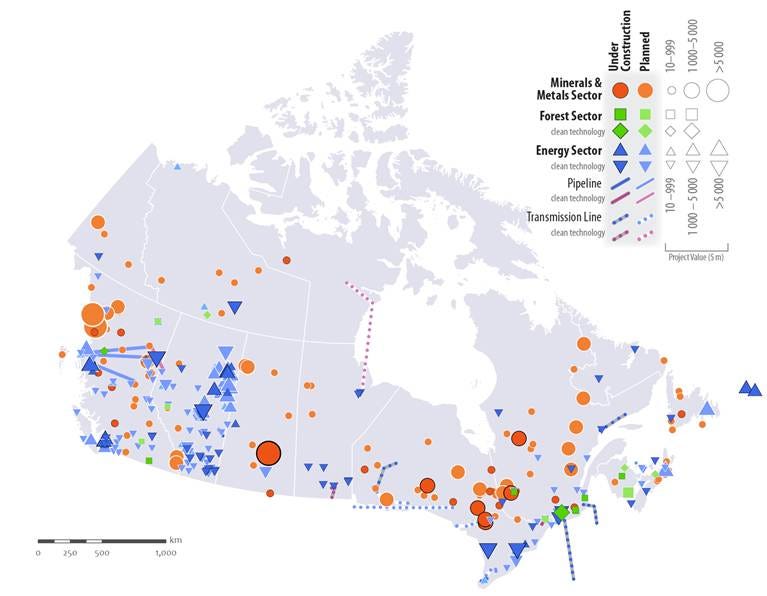
Industrial project activity is geographically concentrated in resource rich regions. Natural Resources Canada’s inventory shows that Canada had 504 major natural resource projects planned or under construction in 2024, worth a combined $632.6 billion [7]. These projects cluster in resource-rich regions and often draw from overlapping pools of trades, supervisors, camp staff, and specialized contractors.
When commodity prices rise, many owners read the same signal at the same time. Projects that were shelved or marginal suddenly become viable. Firms restart work, contractors mobilize, and labour demand spikes.
Labour is one of the largest and most inflation-sensitive components of construction cost, though its share varies by project type, delivery model, region, and sector. In many projects, labour can represent roughly 20–50% of total cost. A 10–20% increase in labour rates can therefore materially affect project economics, especially when escalation also affects materials, equipment, accommodation, and subcontractor pricing [4].
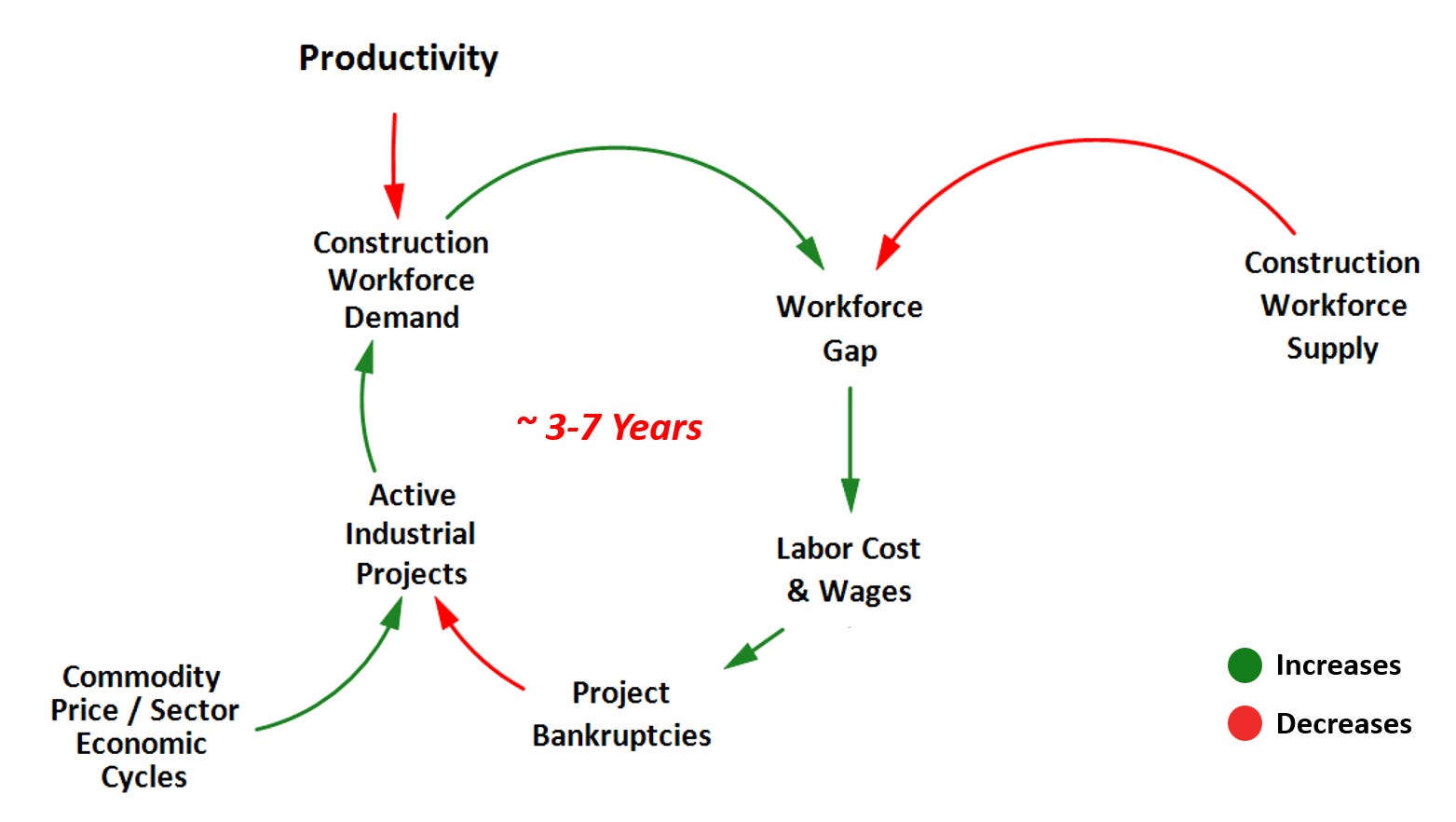
The causal chain is straightforward: higher commodity prices make more projects economic; synchronized project activation increases demand for trades, supervisors, equipment, camps, and contractors; labour shortages push wages upward; higher wages increase total project costs; and marginal projects become uneconomic again.
Few robust projects survive the boom with good enough economics that buries bad decisions. Others are delayed, scaled back, or cancelled. Demand eventually falls. The cycle takes, typically, 3 to 7 years.
The human cost is equally important. Research on unconventional oil and gas boom-bust cycles shows a recurring pattern: employment and earnings rise during the boom, but unemployment, poverty, income losses, and welfare receipt can rise during the bust [5]. Firms often hire aggressively during booms, compete for the same experienced workers, and then release workers when the cycle turns [5].
Workers remember this instability. A young person considering the trades does not see only the wage premium at the peak. They may also see layoffs, travel disruption, camp work, family strain, and physical demands tied to volatile investment cycles.
The geographical concentration matters. In northern Alberta, northern Ontario, northern British Columbia, Saskatchewan, and other resource regions, the boom-bust cycle is the rhythm of livelihood for many communities.
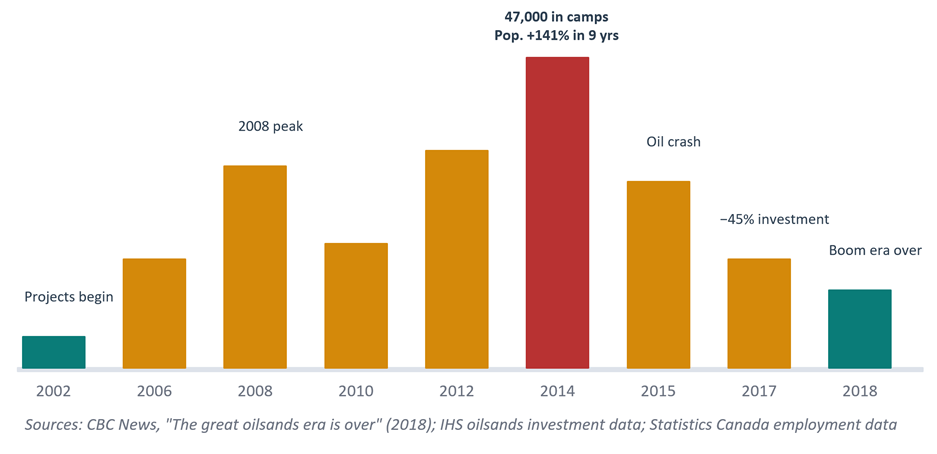
The Alberta oil sands cycle illustrates the mechanism. Investment accelerated through successive peaks in 2008, 2012, and 2014. At the height of the boom, camp populations reached 47,000 workers, and the regional population had grown 141% in nine years. The 2015 oil price collapse then reversed the cycle: investment fell 45%, projects were delayed or cancelled, and the boom era had largely ended by 2018 [6].
Counter-cyclical examples do exist. IAMGOLD’s Côté Gold project in northern Ontario offers one case of more counter-cyclical project preparation. But such examples remain exceptions. The dominant pattern is still that owners pause together, restart together, and compete for labour together.
This is the first major feedback loop that operates on 3 to 7 years cycles: commodity signals synchronize demand, synchronized demand increases labour pressure, labour pressure increases project cost, and rising project cost eventually destroys part of the demand that created the shortage.
3. The Heavy Industries Maintenance Cycle
Heavy industries, such as, oil refineries, petrochemical plants, potash mines, pulp mills, and processing facilities, require periodic Shutdowns, Turnarounds, and Outages (STOs) for inspection, maintenance, and regulatory compliance. These events are usually planned months, and often years, in advance. Yet they can still create acute regional labour shortages.
A single outage may require hundreds of additional workers for only one or two weeks, compressing months of maintenance into a narrow execution window [8]. During that period, workers may face long shifts, night work, consecutive days without rest, and unfamiliar site conditions [8]. Since most operators do not carry enough permanent staff to execute shutdown work, they rely on multiple contractors at once, drawing heavily from the same regional craft labour pool [8].
Spring and fall are preferred turnaround windows, especially in northern climates where weather affects execution risk. When several facilities schedule STOs in the same season, they compete for the same trades at the same time.
Alberta’s 2025 turnaround season illustrates the pressure: refinery and plant maintenance overlapped with major capital projects, including Dow’s $8.9 billion chemical complex and Air Products’ $1.6 billion hydrogen facility, creating an acute crunch for pipefitters, crane operators, and scaffolders amid 3.6% sectoral wage inflation [9].
Shutdown work is time-bound and operationally critical (inelastic demand). A single day of schedule delay can mean the loss of a full day’s profit for these plants, which can reach millions of dollars. Therefore, when labour is scarce, firms often respond with high premiums, accelerated hiring, and in some cases, Harley-Davidson raffles.
This maintenance cycle also is connected to the industrial boom-bust loop. New resource projects increase future demand for processing, refining, and maintenance. When commodity prices are high, operators may run plants harder, which can increase maintenance intensity.
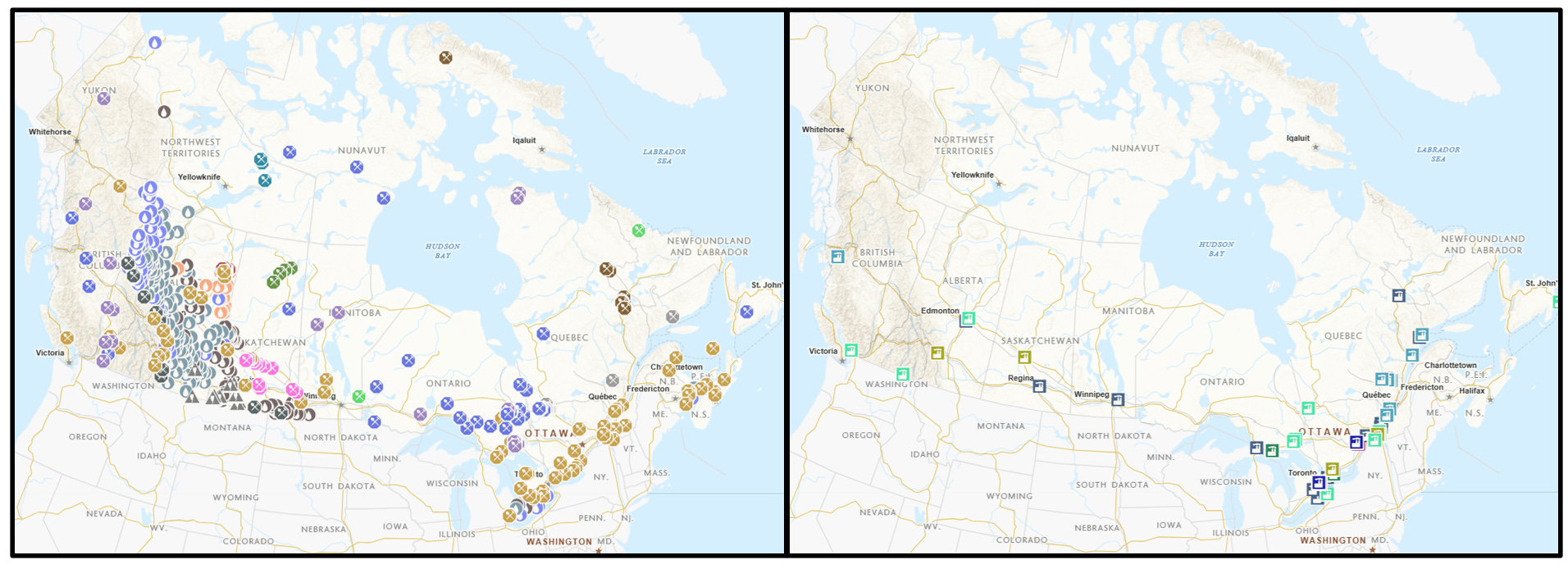
The geography reinforces the problem. Refineries, petrochemical plants, mineral-processing facilities, and upstream resource projects often sit in the same corridors: northern Alberta, northern British Columbia, Saskatchewan, northern Ontario, and coastal LNG and petrochemical clusters. They draw from overlapping pools of trades, supervisors, scaffolders, crane operators, and specialized contractors.
4. The Coordination Gap: Everyone Plans Alone
In many industries, competitors share some forms of infrastructure while still competing in the market. Airlines rely on air-traffic control. Retailers depend on shared logistics systems.
Construction and heavy industry have not developed an equivalent mechanism for regional labour-demand visibility partly because construction projects are highly unique, location-specific, and variable in their timing, scale, and labour requirements.
Firms do not usually share project pipeline, turnaround, or labour-demand data. In some cases, direct coordination among competitors over scheduling, capacity, or output may raise competition-law concerns in Canada and the United States [11].
Two refineries in the same region cannot legally agree to stagger their turnaround dates with each other, even though doing so would smooth demand for scaffolders, pipefitters, and electricians across the year.
That caution is understandable. But the absence of any lawful coordination mechanism leaves the system somewhat blind, and prone to opportunistic behaviours.
The result is predictable. Each firm plans from its own signals: its own project approvals, maintenance windows, procurement dates, and hiring needs. When commodity prices rise or regulatory shutdowns approach, many firms in the same region respond at once. Individually, each decision may be rational. Collectively, they create synchronized labour spikes.
5. Supply Cannot Respond Fast Enough
At the heart of this problem is a question many young people ask themselves: is construction a rational career choice?
The decision to enter and remain in construction depends on more than wages and short-term employment availability. It depends on whether the industry can offer a safe working environment, reliable income, reasonable benefits, career progression, and working conditions that do not systematically shorten a life.
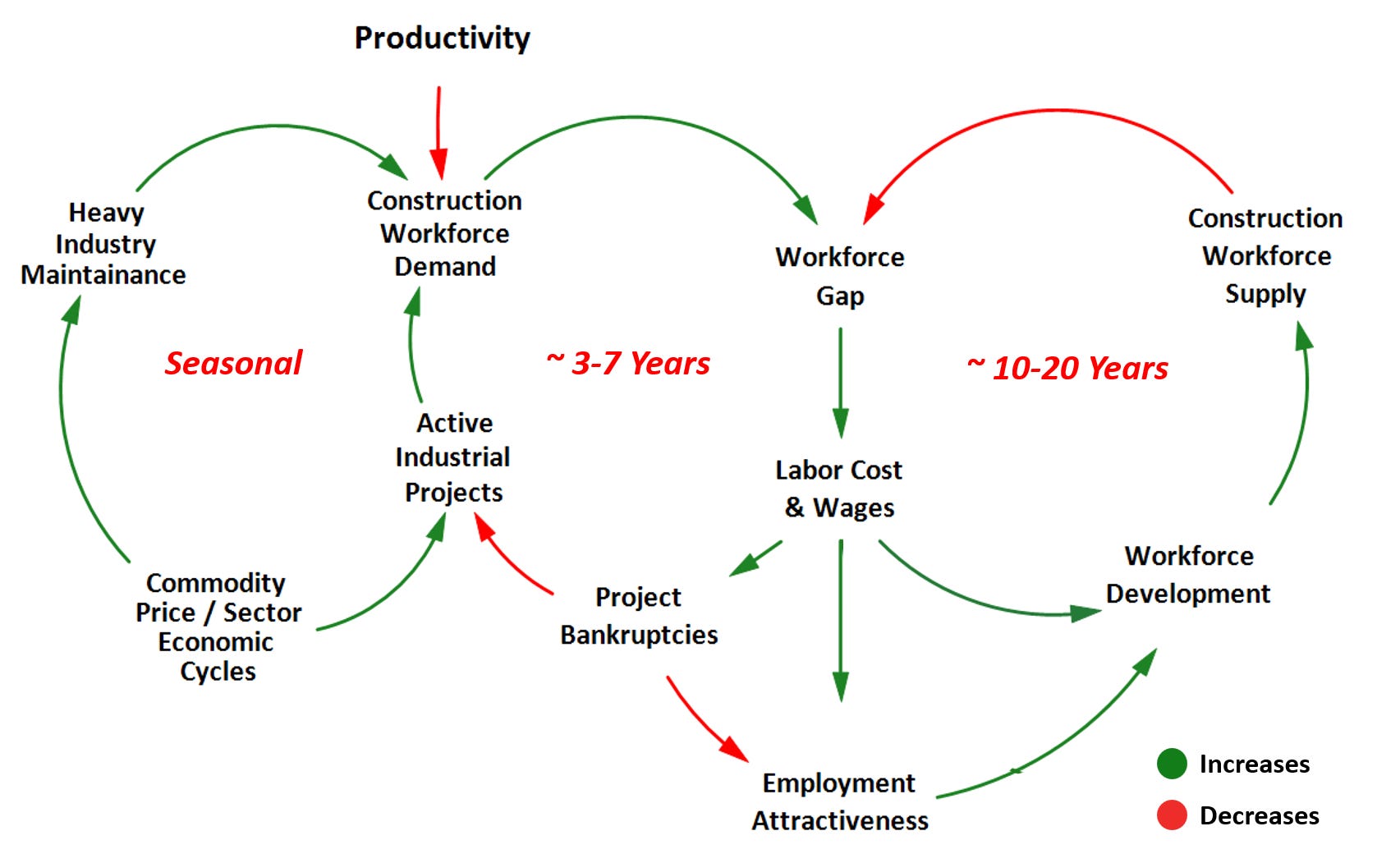
In theory, the system has a stabilizing mechanism. When demand rises and wages increase, construction should become more attractive. More workers should enter apprenticeships, and supply should eventually recover. But in practice, that balancing loop is weakened by three problems: training delay, pipeline leakage, and career volatility.
First, supply arrives late. It can take three to five years for an apprentice to become a qualified journeyperson. By the time higher wages translate into skilled labour on site, the project cycle may already have changed.
Second, the pipeline leaks. More than 100,000 new apprentices registered in Canada in 2024, but only about 34,000 completed, a national completion rate of 19.9%, below pre-pandemic levels [12]. The barriers are well known: employers may hesitate to sponsor apprentices through training blocks, while apprentices already earning close to journeyperson wages may be reluctant to take the pay cut required for classroom training [12]. Ontario alone faces a projected shortfall of 52,000 construction workers by 2034, even with planned training investments [13]. Some skilled workers also leave for the United States, where wages, regulation, and immigration pathways may appear more attractive [12].
The federal government’s 2026 commitment of $6 billion over five years to train 100,000 new workers is therefore important, but not sufficient. It increases intake, but it does not by itself fix completion, retention, or mobility leakage [14].
We are investing heavily in bringing people in while not focusing on why so many leave.
Third, volatility makes construction less attractive as a long-term livelihood. Boom-time wages can be powerful, but what often follows is higher unemployment, poverty, income losses, and reliance on social assistance during the bust [5].
Firms respond rationally but narrowly. US construction wages rose by an average of 20% from 2021 to 2023 during the infrastructure boom, with some specialized trades seeing annual increases of 9% to 11% in high-demand regions [15]. During booms, they hire aggressively, compete for the same experienced workers, and push wages and costs higher [5]. When retention becomes the crisis, they add base pay, benefits, and overtime policies, reported by 61%, 63%, and 54% of firms respectively, but these responses raise cost without addressing the volatility that drives people away [16].
The result is a high-turnover workforce. Construction turnover exceeds 21% annually, with average tenure of about four years [16]. Replacing one worker can cost 50% to 200% of that worker’s annual salary [17]. The consequences are familiar to anyone managing projects: delayed schedules, compromised safety, higher costs, and diminished quality [17].
This is how volatility becomes generational. Workers who experience repeated busts may not return. Apprentices laid off during downturns may not re-register. Workers who leave remote project regions for cities may not come back. Parents, guidance counsellors, and experienced tradespeople then pass on the lesson: construction can pay well, but it may not be stable.
That perception matters. For every five Baby Boomers retiring from skilled construction roles, only two younger workers are entering to replace them [18]. One survey found that only 3% of young adults named construction trades as a career they wanted to pursue [19]. Only 38% of Gen Z believe skilled trades offer the best job opportunities, compared with 59% of Baby Boomers [18]. Workers under 25 make up 13.6% of the total US labour force but only 10% of the construction workforce [20]. Among young tradespeople, 42% cite social stigma and 35% cite lack of parental support as barriers to entering the trades [21].
By the time the industry reacts to the problem, the shortage has already moved into the next cycle.
6. The Band-Aid Trap: Usual Fixes Can Backfire
The usual responses to the construction workforce shortage, immigration pathways, out-of-province recruitment, apprenticeship subsidies, wage increases, and diversity campaigns are necessary. Large projects depend on mobile labour, and Canada will need both domestic and international workers to meet future demand.
But these fixes are structurally incomplete. They add inflow without necessarily reducing volatility, improving retention, fixing completion, or protecting productivity.
The most common short-term response is to widen the labour pool quickly: bring in workers from other provinces, recruit from abroad, pay premiums, and hire less experienced labour when experienced trades are unavailable.
A larger but less experienced workforce requires more supervision, more coordination, more onboarding, and often more rework.
In a tight labour market, the experienced workers who should be mentoring apprentices or integrating new crews are already stretched. The result is a familiar project-management trap: headcount rises, but productivity declines.
Canada’s 2026 fast-tracked permanent-residence pathway for up to 33,000 temporary workers in in-demand sectors, including construction trades, may help increase available labour [22]. But immigration alone does not solve the regional timing problem that causes shortages to appear suddenly in specific labour markets. Nor does it address the volatility that drives workers out of the industry, and the remote regions, after the boom.
Wage increases have the same limitation. Higher wages can attract workers during a boom, but they also increase project costs. When cost escalation pushes marginal projects into delay or cancellation, the wage response reinforces the boom-bust cycle it was meant to solve.
When cost escalation pushes marginal projects into delay or cancellation, the wage response reinforces the boom-bust cycle it was meant to solve.
Training investments perhaps is the most positive strategy for the system, but without a holistic plans face a different bottleneck. More apprenticeship registrations do not automatically produce more journeypersons. With Canada’s apprenticeship completion rate at 19.9%, much of the investment in recruitment, employer sponsorship, and classroom training fails to become certified capacity [12].
A policy aimed at one clock misses the others.
The deeper issue is timing. The major feedback loops operate on different clocks: boom-bust cycles over three to seven years, apprenticeship formation over three to five years, retention and attrition over several years, and generational perception over one or two decades.
7. Productivity: The Hidden Multiplier
The usual workforce fixes share a hidden risk: they may add headcount without increasing effective capacity. A larger but less experienced workforce is not the same as a more productive workforce.
The workforce problem is often framed as a shortage of people. But productivity changes the size of the shortage itself. Formally, effective labour demand equals construction demand divided by productivity: D(t) / P(t). If productivity falls, the same volume of construction output requires more labour hours. If productivity improves, the same workforce can deliver more.
This distinction matters. If productivity falls by 30%, labour required for the same output rises by more than 30%, roughly 43%, because the system is now operating at 70% of its previous output per worker.
The evidence is troubling. Between 1970 and 2024, aggregate US labour productivity more than doubled, while construction labour productivity declined by roughly 30% [23]. Globally, construction productivity improved by only 10% from 2000 to 2022, compared with 50% across the total economy and 90% in manufacturing [24]. If this trajectory continues, the world faces a projected $40 trillion shortfall in meeting construction demand by 2040 [24].
The workforce shortage also reinforces the productivity problem. Tight labour markets push employers to hire less experienced workers, and construction productivity research identifies lack of worker experience as one of the strongest drivers of productivity loss [25].
Less experienced crews often require more supervision and generate more rework. Rework alone can reduce labour productivity by up to 30% and consume 5% to 9% of total project costs [26]. Sixty percent of general contractors and 68% of trades workers identify poor coordination and schedule management as key drivers of lost productivity [27].
This creates a reinforcing loop: labour shortage leads to less experienced crews; less experienced crews increase rework, supervision burden, and delays; lower productivity increases effective labour demand; and higher demand deepens the shortage.
8. Unions: Stabilizers in the Boom, Exposed in the Bust
Unions connect recruitment, training, wages, safety, mobility, benefits across multiple employers and projects.
When demand surges, owners and contractors look to unionized labour markets for trained workers, known wage structures, apprenticeship pathways, safety expectations, portable benefits, and institutional memory. Statistics Canada’s dedicated Construction Union Wage Rate Index is itself a reminder that negotiated wage structures remain a significant part of how construction labour markets are organized [28].
This stabilizing role matters. Collective bargaining coverage is associated with more formalized employment conditions, including wages, benefits, and job security [29]. Canada’s Building Trades Unions represent more than 600,000 skilled trades workers and report more than $300 million in annual private-sector investment across 197 union training centres [30].
But this creates a serious contradiction. During the boom, the industry asks unions to help absorb demand, mobilize skilled labour, and prevent wage competition from becoming pure spot-market chaos. During the bust, that same workforce is often left exposed. Owners defer capital. Contractors demobilize. Union workers return to out-of-work lists. Apprentices lose hours. Some firms shift back toward non-unionized labour at much lower rates. Training centres continue preparing people for a demand cycle that may already have collapsed.
Canada is already struggling to convert apprenticeship intake into certified capacity. In 2024, more than 100,000 new apprentices registered, but only about 34,000 completed; if nothing changes, Canada faces a persistent gap of more than 20,000 skilled trades workers per year [31].
If the industry calls on unions when labour markets overheat but abandons workers when demand falls, it should not be surprised when apprentices leave, journeypersons do not return, and the next generation questions whether construction is a career worth entering.
8. The Understanding Gap
There is another gap beneath the workforce crisis: a gap in shared understanding.
Economists, project managers, industry associations, governments, tradespeople, and unions are often looking at the same problem through different lenses and models. Each lens is useful but they each also has a blind spot.
Policy makers often view the problem through an economic lens: capital investment creates labour demand, demographics shape labour supply, and the difference becomes the gap. This framing is valuable, but it can smooth over boom-bust cycles, and treat productivity as relatively fixed.
Project managers experience the same gap as schedule and staffing risk. The problem is not a national shortfall in 2034; it is a pipefitter needed in Q3, a subcontractor that cannot mobilize, or a crew that arrives without enough experienced supervision. This frame is practical and urgent, but it often responds to symptoms rather than the system producing them.
Tradespeople and unions see the gap through a third lens: livelihood stability, safety, dignity, craft identity, and whether a life in construction is sustainable. From this perspective, productivity is not an abstract output-per-worker measure. It is shaped by site conditions, tools, supervision, fatigue, rework, and whether quality work can be done at a reasonable pace.
The policy consequences are significant. A policy solution may emphasize training and demographic projections. A project-management solution may emphasize schedule buffers, redundancy, and wage premiums. A labour solution may emphasize safety, working conditions, benefits, and retention. None of these is wrong. But each is incomplete on its own.
There is also a missed angle: the complexity and interconnectedness of how engineering projects actually unfold.

As with any complex, multidisciplinary problem shaped by noisy feedback, uncertainty, and delayed consequences, different actors see different parts of the workforce system. Economists see labour-market imbalance. Project managers see delivery risk. Tradespeople see the lived reality of work. Much like the old fable of the blind men and the elephant.
9. The Next Wave and Our Chance to Course-Correct
Another demand wave is forming, this time with a more centralized national driver.
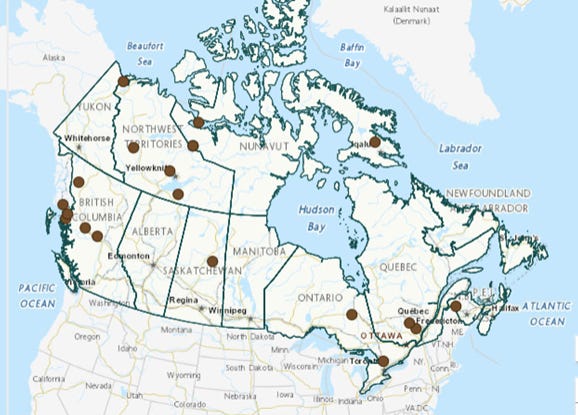
The Government of Canada’s Major Projects Office has referred 17 nation-building projects for federal assessment and consultation, spanning energy, minerals and metals, and forest-sector projects [35].
A second pressure is emerging from AI and data-centre infrastructure. Data centres alone are projected to consume up to 9% of total US electricity generation by 2030, creating a new source of sustained construction and power-infrastructure demand [32].
There are also some encouraging signs with regards to new entrants. The Wall Street Journal’s description of Gen Z as the “Toolbelt Generation” pointed to rising trade-program enrolment, including a 23% increase in trade programmes and a 16% rise at vocational community colleges [18].
This is also where diversity and inclusion can become part of the workforce equation, not a separate social objective. The industry has a labour shortage while large parts of the adult population remain underrepresented in skilled construction roles. In the United States, women represent 11.2% of construction workers, but only 3.3% of workers in skilled construction trades and 8.5% of construction management positions [33]. Black and Asian workers are also underrepresented in construction, while Hispanic workers are often concentrated in labourer and helper roles rather than certified skilled-trade positions [33].
There are precedents for governmental coordination of workforce when it comes to infrastructure projects.
Earlier federal infrastructure programmes did not solve construction cyclicality, but they did create a more visible and predictable public-spending pipeline. The Investing in Canada Plan, for example, was explicitly designed as long-term, sustained funding to support planning and prioritization across orders of government [34].
Organizations such as BuildForce Canada then helped translate construction investment, labour-market conditions, retirements, mobility, and trade-level demand into a shared forecasting system used by owners, contractors, labour groups, governments, and training providers [1].
The opportunity now is to widen that logic beyond public infrastructure alone. If the Major Projects Office is already positioned as a point of contact for nationally significant projects, with a mandate to coordinate federal approvals, reduce duplication, structure financing, and reduce project risk, it could also help Canada see the cumulative labour-demand profile of the full project portfolio before the next shortage peaks [35].
10. Question then Becomes
Canada’s construction workforce gap is not simply a shortage of workers. It is produced by feedback loops: volatile demand, delayed training, pipeline leakage, productivity loss, and weak coordination. If that diagnosis is right, the response cannot be another isolated programme.
The question, then, is what an effective systemic intervention would look like, and how different institutions are positioned to design it.
Should it begin with visibility? A regional labour-demand observatory could help owners, contractors, unions, training providers, and governments see anonymized aggregate demand, by trade, region, quarter, and project phase, before the shortage arrives.
When no institutional coordination mechanism exists, what behaviours fill the vacuum, labour hoarding, last-minute poaching, inflated premiums, strategic overbooking, or quiet side arrangements that may not withstand scrutiny?
At what scale should this happen? The workforce gap persists partly because every firm optimizes locally inside a system no one can see.
And if the generational loop is beginning to turn, if rising Gen Z trade-program enrolment is real, what must the industry do now to meet that generation on its way in?
Readers familiar with my work on project management strategy may ask: what if this is a prisoner’s dilemma, where every firm has an incentive to defect anyway? But the deeper issue is how to change the game itself, from competition over a shared labour pool to a coordination game in which cooperation becomes rational.
Notes
Join the EPM Network to access insights, influence our research, and connect with a community shaping the industry’s future.
Support us by sharing this article with your friends and colleagues, or over social media.
If you wish to share your opinion, provide insights, correct any details in this article, or if you have any questions, please email editor@epmresearch.com.
Refer to this article using the following citation format:
Zangeneh, P. (2026). “The Workforce Gap: Demand, Supply, and Productivity.” EPM Research Letters.
References
[1] BuildForce Canada (2024). Construction and Maintenance Looking Forward: 10-Year Outlook for the Canadian Construction and Maintenance Industry. BuildForce Canada.
[2] Royal Bank of Canada (RBC) (2023). Carving a new path: How to solve Canada’s housing supply challenge
[3] Berto Contractors Ltd. (2025). Tackling Labour Shortages in BC’s Construction Industry
[4] Cleopatra Enterprise (2024). The Impact of Inflation on Construction Project Budgets
[5] Raimi, K., et al. (2022). A review of community impacts of boom–bust cycles in unconventional oil and gas development. Energy Research & Social Science.
[6] AInvest (2025). Rising Output and Labor Constraints in Canadian Oil Sands: A Strategic Opportunity Amid Structural Challenges
[7] Natural Resources Canada (2024). Natural Resources: Major Projects Planned or Under Construction, 2024 to 2034.
[8] Prometheus Group / Cleopatra Enterprise (2024). What are Shutdowns, Turnarounds, and Outages (STOs)?
[9] OilPrice.com (2024). Skilled Worker Shortage Stalls U.S. Construction Boom in 2024
[10] Autodesk / FMI (2024). 100+ Construction Industry Statistics. Autodesk Construction Cloud.
[11] Competition Bureau Canada (2023). Competitor Collaboration Guidelines; U.S. Federal Trade Commission & U.S. Department of Justice (2000). Antitrust Guidelines for Collaborations Among Competitors.
[12] CBC News (2025). In the trades, apprentices are increasing, but not enough are making it to certification. CBC News.
[13] EDI Weekly / Ontario Construction Secretariat (2024). Shortage of skilled labour facing Ontario construction industry: report. Engineered Design Insider.
[14] HPAC Magazine (2026). Feds announce $6B five-year Team Canada Strong plan to boost skilled trade apprenticeships
[15] CBRE / NAIOP (2022–2023). Construction Cost Challenges Shift from Materials to Labor. NAIOP — Commercial Real Estate Development Association.
[16] Bridgit (2026). 50+ Construction Workforce Retention and Turnover Statistics for 2026
[17] TradeWorx USA (2025). Building Tomorrow’s Workforce: Retaining Skilled Trades in a Competitive Market
[18] For Construction Pros / Wall Street Journal (2024). Gen Z Revitalizes the Skilled Trades Amid Construction Labor Shortages
[19] National Association of Home Builders (NAHB) (2017). NAHB Young Adult Survey on Career Preferences (cited in JCHS Harvard). Joint Center for Housing Studies, Harvard University.
[20] X3 Tradesmen (2024). The Shortage of Millennials & Young People in Construction Trades
[21] DEWALT / WorldSkills International (2024). Nearly Half of Young Tradespeople Say Social Media Inspired Them to Choose a Career in the Trades. PR Newswire.
[22] Singleton Law Firm (2025). Canada’s New Immigration Policies Targeted at the Construction Sector
[23] Gottlieb, R. L., et al. (2022). The Strange and Awful Path of Productivity in the U.S. Construction Sector. NBER Working Paper 30845.
[24] McKinsey Global Institute (2024). Delivering on construction productivity is no longer optional. McKinsey & Company.
[25] Al-Momani, A. H., et al. (2025). Critical Factors Affecting Construction Labor Productivity: A Systematic Review and Meta-Analysis. Buildings (MDPI).
[26] Gonzalez, V., et al. (2020). Study of relationship between rework and labor productivity in Building Construction Projects. Revista de la Construccion.
[27] ConstructConnect (2025). Construction Labor Market Remains Stagnant Amid Slowing Demand
[28] Statistics Canada. (2026). Construction union wage rate index, monthly. Statistics Canada.
[29] Statistics Canada. (2024). Collective bargaining coverage rate, 2023. Quality of Employment in Canada.
[30] Canada’s Building Trades Unions. (n.d.). Canada’s Building Trades Unions.
[31] Government of Canada. (2026). Chapter 2: Benefitting Canadians: A Canada for all. Spring Economic Update 2026.
[32] US Bureau of Labour Statistics (2025). What’s behind the projected construction employment growth from 2023 to 2033?
[33] BigRentz / ECI Solutions (2024). Women in Construction: The State of the Industry in 2024
[34] Housing, Infrastructure and Communities Canada. (n.d.). Investing in Canada Plan – Building a Better Canada. Government of Canada.
[35] Major Projects Office. (2026). Project Support. Government of Canada.